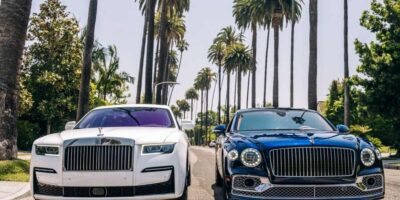
Choosing among Rolls-Royce models is less about finding a hierarchy and more about understanding four distinct ideas of motoring. Ghost presents a contemporary four-door interpretation shaped for clients who often prefer to take the wheel themselves. Phantom gives greater emphasis to ceremony, scale, and the rear cabin. Cullinan brings Rolls-Royce craftsmanship into a high-sided form suited to changing roads and changing plans. Spectre carries the marque into electric motoring through a two-door grand touring shape.
Each is recognizably a Rolls-Royce, yet the experience is not interchangeable. The proportions, cabin layout, materials, Bespoke possibilities, and sense of occasion differ in ways that matter more than a simple specification sheet can show. For a first-time client, or a collector considering another commission, the most useful question is not which model ranks highest. It is which one reflects the way the motor car will actually be used.
That distinction is especially important because the current family has continued to evolve. Ghost and Cullinan are offered in Series II form, while Rolls-Royce introduced Spectre Series II in 2026. Phantom remains the marque’s most formal four-door motor car. Looking at these Rolls-Royce models side by side makes their individual character much easier to understand.
Understanding the Current Rolls-Royce Models
Rolls-Royce does not treat its motor cars as variations on one formula. Each begins with a different purpose, even though familiar signatures connect the family. The Spirit of Ecstasy, upright Pantheon grille, coach doors, extensive Bespoke work, and carefully selected interior materials create a common visual language.
At a glance, the four principal Rolls-Royce models can be understood this way:
- Ghost is the contemporary luxury sedan for clients who want discretion, space, and a strong connection to the road.
- Phantom is the grandest sedan, with a more formal presence and a cabin conceived as a private interior space.
- Cullinan is the high-sided model, combining generous passenger room, luggage flexibility, and the ability to travel beyond polished city streets.
- Spectre is the all-electric super-coupé, pairing a two-door fastback form with the quiet character naturally suited to electric propulsion.
These summaries are useful, but the true differences appear in the details. Materials, seating position, body proportions, and the kind of Bespoke work each model invites shape the ownership experience.
Rolls-Royce Ghost: Contemporary, Calm, and Personal
Ghost is often the most natural starting point for someone comparing the sedan side of the range. Its proportions are more restrained than Phantom’s, yet the cabin still offers the isolation, material quality, and sense of deliberate craft expected from the marque. The current Ghost Series II continues that philosophy with a more contemporary exterior treatment and a highly configurable interior.
Rolls-Royce has positioned Ghost with particular appeal to clients who enjoy spending time at the wheel. That does not make the rear cabin secondary. Ghost Extended is available for those who want more space behind the front seats, giving the model a wider range of uses for business travel, formal evenings, or long journeys with passengers.
Readers who want a deeper look at the model can explore this guide to the Rolls-Royce Ghost, which adds more context around its design and place in the modern lineup.
The Character of Ghost
Ghost favors restraint. Its design is clean, the surfaces are broad, and the interior can be commissioned with open-pore woods, detailed embroidery, metalwork, and Bespoke color combinations. Rolls-Royce has also used specially developed veneers such as Obsidian Ayous and Dark Amber in Ghost, showing how natural material can carry much of the cabin’s visual interest without excessive ornament.
That approach suits clients who want a Rolls-Royce that feels personal without feeling ceremonial at every moment. A hand-painted coachline can add a private signature to the exterior. Inside, a Starlight Headliner can recreate a meaningful constellation or another selected arrangement of light.
For broader context on how cabins are conceived, the site’s Rolls-Royce interior luxury guide explains the materials and craft choices that shape the experience across the range.
Rolls-Royce Phantom: Formal Presence and a Private Gallery
Phantom occupies a different place among Rolls-Royce models. It is larger, more formal, and more closely associated with arrival, rear-seat travel, and commissioned detail. Its scale is part of the experience, but the more meaningful distinction is how the cabin is treated.
One of Phantom’s defining features is The Gallery, a glass-enclosed area running across the fascia where clients can commission artwork. The idea moves beyond choosing trim. It creates a dedicated place for a work conceived for the motor car, whether that work involves metal, embroidery, sculpture, or another craft technique.
That focus makes Phantom especially appealing to collectors who already think in terms of art, objects, materials, and provenance. The Rolls-Royce Phantom model guide offers additional background for readers considering its role within the marque.
Phantom and the Art of Commissioning
Phantom is perhaps the clearest example of why a Rolls-Royce commission is not simply a list of options. The Bespoke Collective can work with a client to translate a memory, place, object, color, pattern, or artistic reference into physical details throughout the car.
That might include a hand-painted coachline, embroidery developed from a private motif, a carefully matched veneer, or artwork created specifically for The Gallery. The result can be quiet and nearly invisible to anyone who does not know the story behind it.
Clients curious about that process can also review the site’s explanation of Rolls-Royce Bespoke personalization and the distinction between Coachbuild and Bespoke commissions.
Rolls-Royce Cullinan: Space Without Giving Up Ceremony
Cullinan answers a question that earlier generations of Rolls-Royce clients could not ask of the marque: what if the same approach to quietness, material selection, and personal commissioning were placed in a high-sided motor car?
The result is a model with a more upright seating position, a large rear luggage area, and a form suited to owners whose schedules may include city streets, country properties, coastal roads, winter travel, or family use. Cullinan Series II revised the exterior and interior presentation while retaining the fundamental idea that made the model distinct.
For a closer look at the current generation, this overview of the 2026 Rolls-Royce Cullinan provides supporting detail.
Craftsmanship in Cullinan Series II
Cullinan’s practical form does not reduce the emphasis on craft. In its official presentation of Cullinan Series II, Rolls-Royce describes Duality Twill, a bamboo-derived rayon textile that can contain up to 2.2 million stitches and use as much as 11 miles of thread in a full interior. The model’s Illuminated Fascia uses 7,000 graphical elements laser-etched into glass.
Those figures matter because they reveal how Rolls-Royce treats surfaces that could otherwise be ordinary trim. A textile becomes a field of pattern. A fascia becomes a layered composition of light. The utility of the vehicle remains, but it does not dictate the visual language.
Cullinan may therefore be the best Rolls-Royce for a client who wants one motor car to cover the broadest range of settings, especially when passenger space and luggage flexibility matter as much as formal presentation.
Rolls-Royce Spectre: Electric Motoring in a Rolls-Royce Form
Spectre is the first fully electric Rolls-Royce, but its significance goes beyond replacing a combustion engine with electric motors. The model gave the marque a way to interpret near-silent propulsion through a shape that feels deliberate rather than technological for technology’s sake.
Its long fastback profile, two-door body, and low roof give Spectre a very different visual character from Ghost, Phantom, and Cullinan. Yet the cabin remains rooted in Rolls-Royce ideas: substantial materials, Bespoke work, tailored lighting, and a sense that technology should support the atmosphere rather than dominate it.
The site’s guide to the electric Rolls-Royce Spectre provides more background on how the model introduced battery-electric motoring to the marque.
What Changed With Spectre Series II?
Rolls-Royce presented Spectre Series II in June 2026 with technical updates that extend its official WLTP range to as much as 390 miles, depending on specification, while also reducing charging time by up to 14 percent. Those are meaningful changes for a grand touring electric car because they reduce how often energy planning enters the journey.
The update also expands the model’s Bespoke possibilities. This is consistent with the larger direction of the marque, where new technology is treated as another material for the client experience rather than the center of the story.
For a buyer drawn to the quietness of electric propulsion, the sculptural two-door form, and a more contemporary kind of grand touring, Spectre may be the best Rolls-Royce match.
Which Is the Best Rolls-Royce for Your Lifestyle?
There is no single best Rolls-Royce in isolation. The better answer depends on how often you travel with passengers, where you sit, what roads you use, how much luggage you carry, and what kind of visual presence feels appropriate to you.
Consider the four models through the situations they serve:
- Choose Ghost when you want a four-door Rolls-Royce with a contemporary character and a natural balance between front-seat and rear-seat use.
- Consider Phantom when the rear cabin, formal arrival, artistic commissioning, and a greater sense of ceremony matter most.
- Look to Cullinan when everyday flexibility, a higher seating position, generous luggage room, and varied travel are central to your routine.
- Choose Spectre when you prefer a two-door grand touring form and want the quietness and character of a fully electric Rolls-Royce.
A collector may reasonably arrive at a different answer from a first-time buyer. Someone with several residences may value Cullinan’s adaptability. A client who is regularly chauffeured may be drawn toward Phantom Extended. A buyer who wants a quieter, more personal sedan may favor Ghost. Spectre may appeal most strongly when electric motoring is part of the desired experience rather than merely a technical requirement.
How Bespoke Changes the Comparison
Comparing Rolls-Royce models by body style is useful, but every model can change substantially through Bespoke work. Color can be developed around a personal reference. Veneer can be selected for grain and tone. Embroidery can translate a family symbol, landscape, pattern, or work of art into the cabin.
The Starlight Headliner offers a good example of the time involved. According to Rolls-Royce’s official account of craftsmanship at the Home of Rolls-Royce, a typical Starlight Headliner takes about nine hours to make, while a personalized pattern can require more than 17 hours of hand work. That detail helps explain why the finished effect feels considered rather than decorative.
The story of the Spirit of Ecstasy also adds useful context to the marque’s visual language. Even the familiar bonnet figure has become a place where history, identity, and present-day craft meet.
Bespoke Is Not the Same as Coachbuild
Bespoke begins with an existing Rolls-Royce model and gives the client wide freedom to shape its colors, materials, motifs, and details. Coachbuild goes further. It is reserved for highly limited projects in which the body itself is created around a client’s vision.
For most buyers comparing Ghost, Phantom, Cullinan, and Spectre, Bespoke is the relevant path. It means the model establishes the architecture, while the commission establishes the personal character. Two Ghost commissions can feel markedly different from one another, just as two Cullinans can tell very different stories through material and color.
That is why selecting the model should come before selecting the decorative details. First decide how the car should fit your life. Then decide what it should say about you.
Details Shared Across Rolls-Royce Models
Although each model has a distinct purpose, several ideas appear throughout the current family. These shared qualities explain why the transition from one model to another still feels coherent.
The first is quietness. Rolls-Royce treats sound, vibration, and movement as parts of the cabin atmosphere, not simply engineering problems. The second is material integrity. Wood, metal, leather, textiles, glass, and light are chosen and finished as visible parts of the design.
The third is personal authorship. Through the Bespoke Collective, a client can take a familiar feature and make it private, from a coachline motif to a constellation above the seats. For more detail on how comfort is supported beneath the surface, the site’s explanation of the Rolls-Royce suspension system adds useful mechanical context without reducing the experience to numbers.
What Should First-Time Rolls-Royce Buyers Consider?
A first commission can feel complex because there are many choices, but the decision becomes clearer when those choices are placed in the right order. Begin with use, then model, then seating priorities, and only then move into Bespoke details.
A useful sequence is:
- Decide whether you prefer a sedan, high-sided vehicle, or two-door electric grand tourer.
- Think about where you spend most of your time, in the front seat, rear seat, or both.
- Consider regular passengers, luggage, and the kinds of journeys you make most often.
- Compare standard-wheelbase and extended configurations where available.
- Decide how visible or private you want the Bespoke work to be.
- Review ownership, provenance, and commissioning questions before finalizing the specification.
The site’s guide to the Rolls-Royce buying process can help place those decisions in context. Buyers comparing budgets can also consult the Rolls-Royce price guide as a supporting resource, while remembering that Bespoke content can materially change the final commission.
Frequently Asked Questions About Rolls-Royce Models
What are the main Rolls-Royce models available today?
The principal current Rolls-Royce models discussed here are Ghost, Phantom, Cullinan, and Spectre. Ghost and Phantom are four-door motor cars, Cullinan is the high-sided model, and Spectre is the electric two-door super-coupé. Each can be shaped through Bespoke work, so body style is only the first layer of the decision. Black Badge expressions are also available on selected models for clients who prefer a darker and more assertive interpretation.
Which Rolls-Royce model is best for being chauffeured?
Phantom, especially Phantom Extended, is the clearest choice for a client who expects to spend much of the time in the rear cabin. Its scale, rear-seat environment, and formal character are central to its identity. Ghost Extended can also suit chauffeured travel while presenting a more restrained exterior presence. The best Rolls-Royce choice still depends on how much formality, rear space, and visual presence the client prefers.
Which Rolls-Royce models are best for daily use?
Ghost and Cullinan are often the most natural answers for regular use, though for different reasons. Ghost offers four doors, a lower sedan seating position, and a less formal character than Phantom. Cullinan adds greater cargo flexibility and a higher seating position. Spectre can also serve regular use for clients whose charging setup and travel patterns suit an electric two-door car.
Is Spectre the only electric Rolls-Royce?
Within the current production family discussed here, Spectre is Rolls-Royce’s fully electric model. Spectre Series II, introduced in 2026, continues that role with increased range and shorter charging times than the earlier version. Its purpose is not to imitate a conventional electric vehicle. Instead, it applies electric propulsion to the quiet, deliberate character Rolls-Royce clients already expect.
What is the best Rolls-Royce for families?
Cullinan is likely to be the most practical fit for many families because of its high-sided body, passenger space, luggage area, and flexible everyday use. Ghost can also work well for family travel when a sedan is preferred. The right choice depends on the number of passengers, typical luggage needs, seating preferences, and whether the motor car will serve as a primary vehicle or one part of a larger collection.
How much can Rolls-Royce models be customized?
The scope is broad. Through Bespoke, clients can commission special paint colors, hand-painted coachlines, personalized embroidery, selected veneers, unique lighting details, and many other treatments. The best commissions usually begin with a clear personal reference rather than a desire to add as many features as possible. A place, artwork, material, memory, or family motif can give the designers a more meaningful starting point.
What is Black Badge, and does every model offer it?
Black Badge is a distinct Rolls-Royce expression with darker visual cues and a different character. It is associated with selected models rather than the entire range. Readers considering that side of the marque can review this plain-English guide to Rolls-Royce Black Badge for a fuller explanation of what changes and which buyers may prefer it.
Choose Among Rolls-Royce Models by Starting With Purpose
The most useful way to compare Rolls-Royce models is to begin with purpose rather than prestige. Ghost suits a client seeking a contemporary sedan with balanced front and rear cabin use. Phantom gives greater weight to formality, artistic commissioning, and rear-seat travel. Cullinan brings the marque’s craft philosophy to a flexible high-sided vehicle. Spectre offers a quieter electric grand touring interpretation in a two-door form.
From there, Bespoke work can make the chosen architecture personal. A hand-painted coachline might reference a private color. A veneer may recall a favorite material or place. A Starlight Headliner can carry a meaningful sky above the cabin. The best Rolls-Royce is therefore the one whose basic character already fits the owner before a single personal detail is added.
For buyers exploring which model belongs in their own collection, continue with Braman Rolls-Royce Palm Beach’s guide to the Rolls-Royce buying process and use it as a starting point for a thoughtful model comparison and future commission.
Recent Posts
-
-
Rolls-Royce Models Explained: Ghost, Phantom, Cullinan, and Spectre
September 01, 2026 -

-
-